Expert Shockwave Therapy in Vancouver, WA
Schedule Your VisitShockwave therapy uses acoustic pressure waves, delivered through the skin, to treat painful tendons, joints, and soft tissue. At Restoration Pain & Sports Medicine in Vancouver, WA, our osteopathic team first finds the source of your pain, then decides whether shockwave belongs in your plan. Schedule your visit to get started.
What Is Shockwave Therapy?
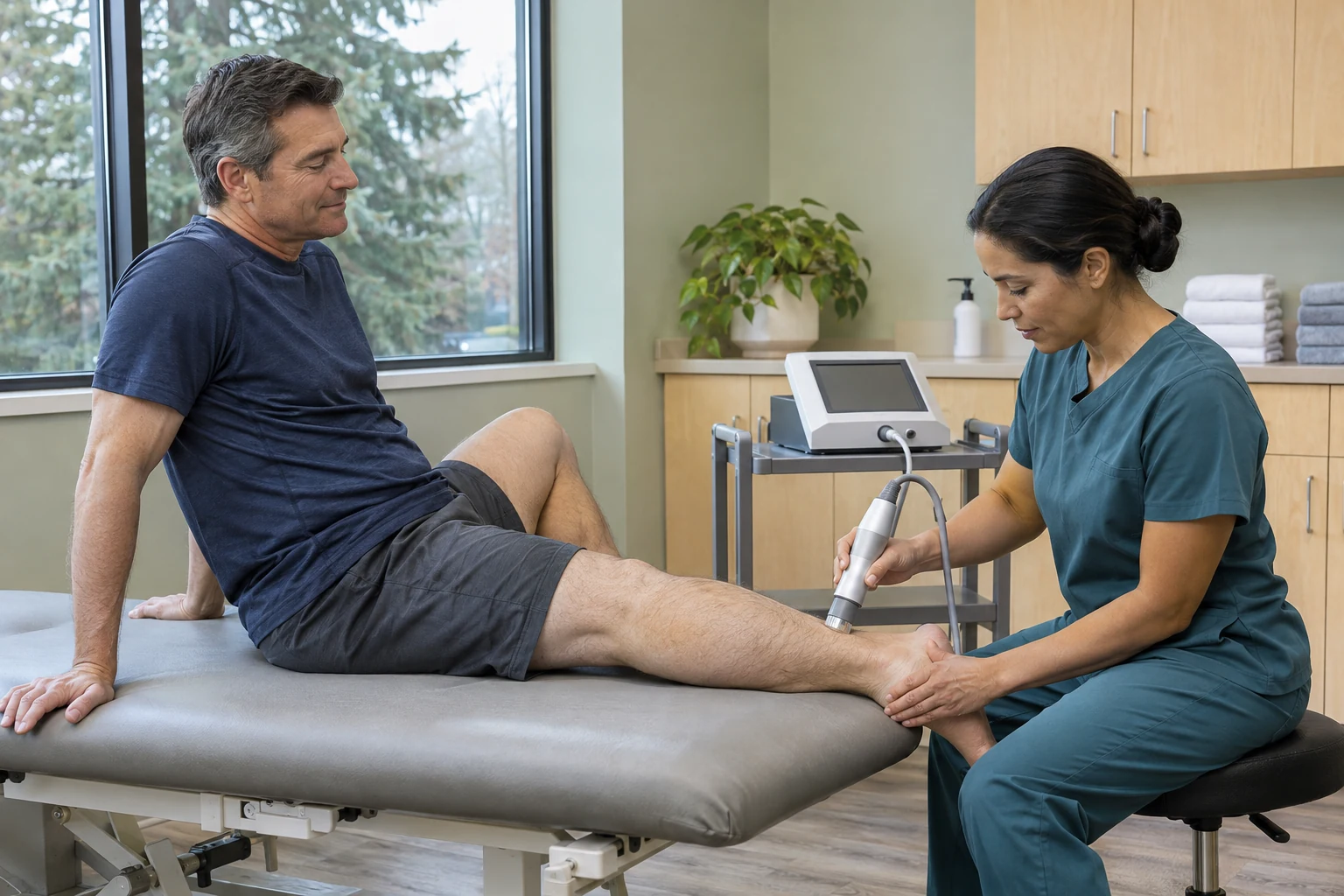
Shockwave therapy, also called extracorporeal shockwave therapy (ESWT), is a non-surgical treatment. A handheld applicator sends focused pressure waves into the painful area. It is used for chronic tendon and soft tissue problems that have not settled with rest or basic care.
What Conditions Can Shockwave Therapy Address?
People often ask about shockwave for pain that keeps returning or interferes with training and daily activity. Common reasons include:
- Plantar fasciitis and heel pain
- Achilles tendinopathy
- Tennis elbow and golfer's elbow
- Shoulder tendon pain
- Patellar tendon (knee) pain
- Persistent muscle and tendon strain from sports
A painful spot does not always mean shockwave is the right answer. We confirm the diagnosis first.
Who Is a Candidate for Shockwave Therapy?
Shockwave may be considered when pain is localized, has lasted for weeks or months, and affects movement or sport. It may not suit everyone. Pregnancy, bleeding disorders, infection near the treatment site, and certain other conditions can change the recommendation, so share your full medical history and medication list at your visit.
How Does Shockwave Therapy Work?
The pressure waves stimulate the treated tissue and nearby nerve endings. The goal is to support the body's own repair response and reduce pain so you can move and rehabilitate more comfortably. Response varies from person to person.
Shockwave Therapy Treatment Process
- Evaluation. We review your symptoms, injury history, and goals, then examine the area.
- Diagnosis. We identify whether a tendon, joint, muscle, or nerve is driving the pain, using ultrasound guidance when it helps.
- Plan. If shockwave fits, we explain the treatment area, what you will feel, and how many visits to expect.
- Treatment. Gel is applied to the skin and the applicator delivers pulses to the target area.
- Follow-up. We review your progress and adjust the plan.
How Long Does Shockwave Therapy Take?
Sessions are typically short. The number of sessions and the time before you notice change depend on the condition, how long it has been present, and your response. We outline a realistic timeline after your evaluation.
Recovery and Possible Side Effects
Most people return to light daily activity afterward. Temporary soreness, redness, swelling, or bruising at the treatment site can occur. We give you activity guidance, and we may pair treatment with osteopathic manipulative treatment, exercises, kinesio taping, or orthotic bracing.
Why Choose Restoration Pain & Sports Medicine?
Our experienced osteopathic providers treat the whole you, not just the symptoms. We take time to listen, explain your options, and recommend only what fits. For knee-related tendon pain, see our non-surgical knee pain care. For muscle pain, see targeted muscle pain care.
Visit Us in Vancouver, WA
We are at 1406 SE 164th Ave, Suite 250, Vancouver, WA 98683, open Monday through Thursday, 8:00 AM to 5:00 PM. Call 360-953-9764 or review our new patient information.
- Address
- 1406 SE 164th Ave, Suite 250
Vancouver, WA 98683 - Hours
- Monday – Thursday
8:00 AM – 5:00 PM - Phone
- 360-953-9764
Frequently Asked Questions
Does shockwave therapy hurt?
You may feel pressure or discomfort during treatment, and intensity can be adjusted to your comfort. Soreness afterward is possible.
How many shockwave sessions will I need?
It depends on your condition and response. We estimate the number of visits after your evaluation and revisit it as you progress.
Is shockwave therapy safe?
It is non-surgical and generally well tolerated, but it is not right for everyone. Your provider reviews your history before recommending it.
Is shockwave therapy the same as ultrasound therapy?
No. Shockwave uses pressure waves, while ultrasound uses sound waves for imaging or heating tissue.
Can I combine shockwave with other treatment?
Often, yes. Your plan may include exercises, manual care, or other joint pain treatment.